Walk Away Split Calculator
Planning to make a walk away split? Input the date you plan to make the split, and then look below the calculated dates for detailed info on what each event means.
| Calculated Date(s) | Event |
|---|
Detailed Guide to Each Walk Away Split Milestone
Below is a complete breakdown of every event generated by the Walk Away Split Calculator and how to manage your new split at each stage:
Date virgin queen emerges (Day +12)
This date assumes that the bees will create a queen using a day-old worker larva (4 days after the egg was laid). Because a queen takes 16 days total from egg to emergence, she emerges roughly 12 days after the split is made.
Orientation flights (Days +15 to +17)
Your virgin queen will take a series of brief afternoon orientation flights on these days to memorize the visual appearance and entrance orientation of her hive.
Queen mating flight window (Days +18 to +20)
Your virgin queen should go on her mating flight sometime within this 3-day window, weather permitting. Avoid moving the hive or changing anything about its appearance during this time.
Start of OA / Organic Mite 7-day treatment window (Days +21 to +28)
When making a walk away split, there will be a window of approximately 7 days when the hive has little to no capped brood. This is an ideal time to control mites by treating your hive organically.
Check colony for presence of eggs (Day +28)
The queen may begin laying before this date, but we suggest waiting until this date to start looking for eggs so anxious worker bees do not ball her.
Combine with Queenright colony (Day +35)
If you still don’t see eggs by this date, we suggest introducing a mated Sandalwood Queen or combining your hive with another queenright colony to avoid laying workers.
How to Make a High-Success Walk Away Split in Nigeria
A Walk Away Split (also called an emergency queen split) is the simplest method for multiplying beehives without searching for the old queen or manual larval grafting. However, two conditions are mandatory for success: (1) abundant mature drones in neighboring hives, and (2) frames containing freshly hatched 12-to-24-hour worker larvae.
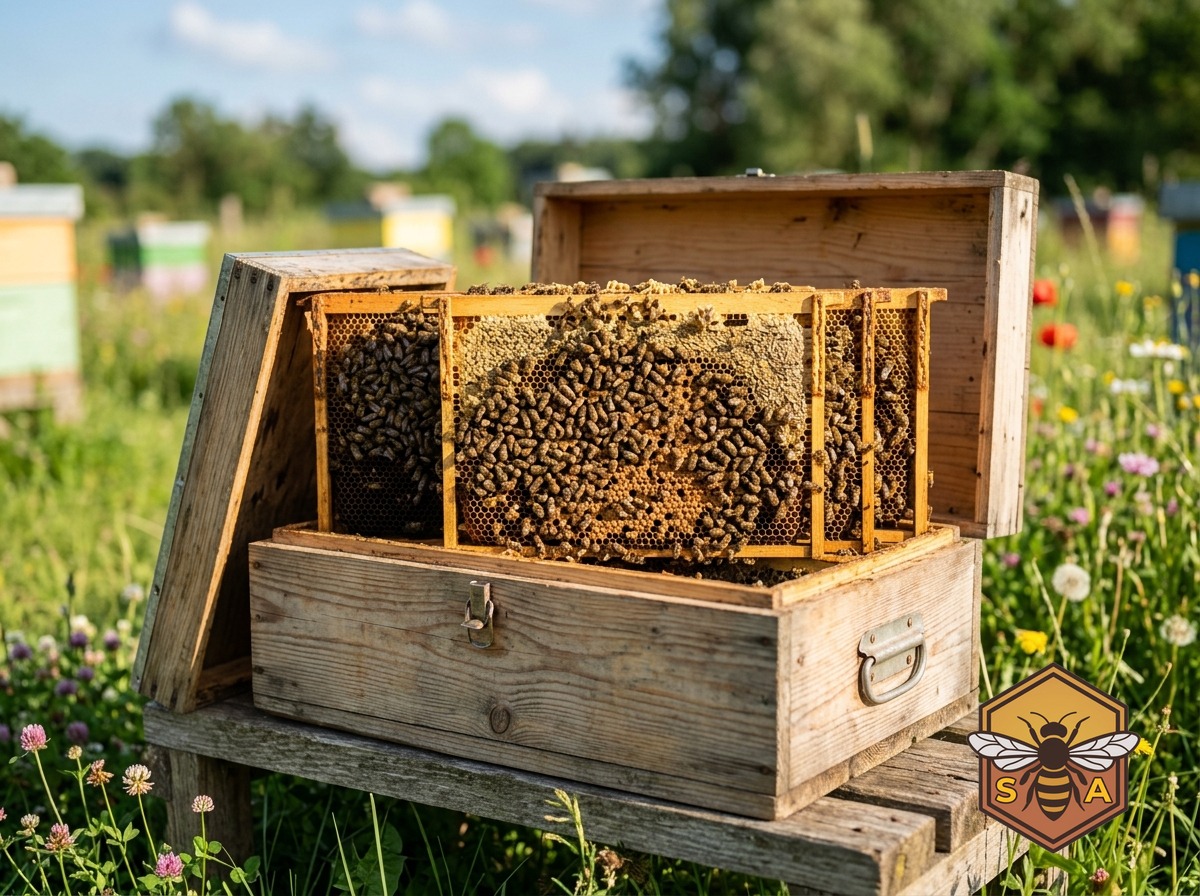
When creating your split at your apiary, give the new box at least 2 frames of open brood (with visible single eggs and tiny glistening larvae in royal jelly), 1–2 frames of emerging capped brood with densely packed nurse bees, and 2 full frames of honey and bee bread (pollen).