

Rainy-Season SHB Prep for Nigerian Beekeepers
If you’re managing hives across Southern or Central Nigeria as the rainy season intensifies, you know how quickly humidity and warm afternoon temperatures can change colony dynamics. Suddenly every beekeeper within 100 km is opening their brood chambers thinking:
“I need to stay ahead of Small Hive Beetles before they touch a single frame.”
Proactive pest management is the secret to stress-free beekeeping. And if there is one management habit that deserves your attention before beetle numbers climb, it is keeping your Langstroth frames and hive bodies tightly patrolled by a populous worker force.
Because nothing ruins a promising honey season faster than opening a super to find unguarded comb slimed by beetle larvae.
Let’s avoid that completely.
Step 1: Audit Your Brood Chamber & Frame Density
Be honest with yourself during your next inspection. When a colony has more empty space than worker bees can actively patrol, adult Small Hive Beetles (Aethina tumida) hide in the dark corners waiting to lay eggs.
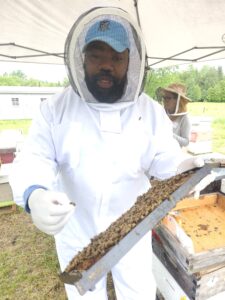
During your inspection, check closely for:
- Frames with unpatrolled outer corners where adult beetles congregate
- Burr comb or propolis crevices along the top bars where beetles shelter from guard bees
- Weak or queenless colonies that lack the population density to chase beetles into traps
- Excess honey supers added too early before the main nectar flow begins
Keeping a compact, densely populated brood nest headed by a vigorous Sandalwood Apiaries laying queen is your strongest natural defense.
Step 2: Install Mechanical Oil Traps & Optimize Hive Tilt
Worker bees naturally herd Small Hive Beetles toward the edges and bottom board of the hive. By fitting in-hive mineral-oil or vegetable-oil beetle traps between your outer frames, guard bees drive the beetles directly into the oil slots where they cannot escape.
- Place hives in dappled or full morning sun rather than deep damp shade
- Maintain dry gravel or compacted laterite beneath hive stands to interrupt larval pupation in the soil
- Give each hive a slight 2-degree forward tilt so humid condensation never pools on the bottom board
Step 3: Harvest & Extract Promptly
When you pull capped honey supers during the peak flow, extract your frames within 24 to 48 hours using our stainless-steel honey extractors and uncapping gear. Never leave unguarded wet honey frames sitting in a warm shed where beetles or wax moths can lay eggs.
And when you open that hive for your next routine inspection, you’ll have exactly what your bees need:
Clean comb, strong brood, and zero pest stress.
Because healthy bees in a tight, well-managed hive always mean one thing at harvest time…
More pure Nigerian honey. 🐝🍯