Nectar Flow Prep for Beekeepers
If you’re a beekeeper watching the savanna trees, cashew orchards, and bush mango come into bloom across Oyo State and beyond, you know the feeling. Morning flight activity doubles at dawn, golden pollen baskets pack the landing board, and every beekeeper is looking at their equipment shed thinking:
“I should probably get my honey supers ready right now.”
Pre-flow preparation is the difference between a record honey crop and losing half your foraging workforce to an early swarm. And if there’s one piece of equipment that deserves your attention before the main nectar flow peaks, it’s your Langstroth frames and foundation.
Because nothing stalls a booming nectar flow like realizing you’re short on prepared frames while the bees are already building wild burr comb under the inner cover.
Let’s avoid that.
Step 1: Face the Frame Situation
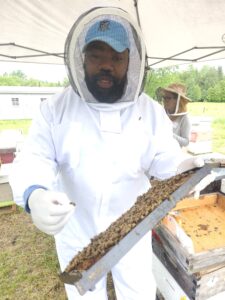
Somewhere in your honey house or storage room is a stack of supers from last season. Before the white wax whitening appears on your top bars, sort through every single box.
You’ll probably find:
- Old brood frames with comb so dark and heavy it should be retired and rendered for beeswax
- Frames glued together with rich West African propolis that need scraping with a stainless hive tool
- Wooden frames that need fresh wired beeswax foundation sheets or tensioning
- Clean, golden drawn comb that your foragers will fill with nectar in a matter of days
A proven rule our specialists teach in our Ibadan Practical Beekeeping Workshops is rotating out 20–25% of your oldest dark comb every season to keep brood chambers hygienic and productive.
Step 2: Watch for White Wax along the Top Bars
How do you know the real nectar flow has started? Look at the top bars of your upper brood frames. When young worker bees begin secreting bright, pearly-white new beeswax to extend cell walls upward, nectar is pouring into the hive.
- Place a precision queen excluder above your main brood chamber
- Add your first medium or deep honey super with 10 prepared frames
- Ensure upper ventilation is clear so bees can fan and cure nectar below 18% moisture
Step 3: Stay One Super Ahead of the Colony
Once your first honey super is 60% to 70% full of glistening nectar and newly capped comb, add a second super so foragers never feel congested. Congestion in the brood nest is the #1 trigger for reproductive queen cells and swarming.
And when you open that hive during peak bloom, it’s rewarding knowing you’re ready with what the bees need:
More frames and more room to store surplus nectar.
Because happy bees with room to grow always mean one thing at extraction time…
More golden honey. 🐝🍯